Author: FeralWriter

  • My Novel, the CIA, and the Job Hunt That Went Nowhere

    My Novel, the CIA, and the Job Hunt That Went Nowhere

    I am absolutely, dead tired of looking for work. I’ve been at it since March. At first I thought I was never going to teach again, so I started a Google Data Analyst certificate. I got pretty far. I started this blog, browsed freelance writing gigs, decided I didn’t want to make thirteen cents an hour. I set up a Carrd for special education consulting. I even invented an alter ego who does intelligence work, because doing learning support internationally is basically that anyway.

    No dice.

    So a few weeks ago I circled back to teaching jobs. I applied to NGOs, paid seventy-five dollars for a subscription to the international schools database, color-coded a spreadsheet, got my references lined up. I sent out applications for this year and even the 26-27 school year. One NGO rejected me. Another nibbled, asked for interview times. I sent them. Silence since.

    Meanwhile my border collie brain has been running in circles: the water went out for hours last week, there’s a national strike about diesel prices (I’m with the Indigenous people on this one), and today the power was supposed to go out too.

    So I thought. And thought. And finally said: fuck it. I’m going to work on the book.

    Eight years ago I wrote a 227-page sci-fi draft called Matter. I printed it, put it in a binder, posted about it on Facebook. A handful of likes, zero comments. No one ever brought it up again. I thought writing a draft was a big deal. Apparently it wasn’t. So I shelved it, became a teacher, and tried not to care.

    After my divorce I printed it again, tried revising during a week alone, and realized it was a shitty draft. Back it went to the shelf.

    But this week, with job apps marinating, I opened the original 2018 file. Made an outline doc, character sheets, grabbed a notebook. Started reading it like a scientist. And it’s… actually not that bad. It needs structure, some connective tissue, and a main character with more guts. But the bones are good.

    She’s a stay-at-home wife abducted by aliens, chased by the CIA. It’s about power and loss, about having to let go of everything to make something new. About when to hold on and when to let go. At the end you’re living a life you never imagined. There’s love and heartbreak and the unraveling of an old identity.

    Seven years ago I thought I’d never leave that rust-belt house, vacuuming dog-hair dust bunnies and cooking for people who barely tolerated my menu ideas. Instead, in less than a year I’ve slept on five continents. I’ve eaten ragu in Bologna, heard the Ramadan cannon, fought through Istanbul duty-free, watched a Quebec lake thaw in spring. Now I’m nestled in mountains south of the equator, listening to thunderstorms that never quite rain.

    Until I figure out where I’m going next, I can straighten out Matter. Test the beams, change the drapes, pick new furniture. Keep my brain from chewing itself to bits. Maybe even live the dream of seeing my name on a spine.

    The me from seven years ago would barely be able to breathe with happiness. I’m very much doing it for her.

  • Even Women See What’s on the End of the Fork

    Even Women See What’s on the End of the Fork

    I have been so incredibly fucking tired. 

    Last week, I realized I’d been running on fumes for decades. I realized I’d been nervous and exhausted and trying to make everything make sense for as long as I could remember. Even when I was drinking, even when the twins were babies, even when I was in Morocco. I’ve been dancing steps that other people told me were the right ones, even if it didn’t look like I was doing it the right way. Turns out that being on the spectrum means you’re allergic to doing what other people tell you to do. 

    God I hate that.

    Still, I followed the steps. I worked my way through college after being written out of the will. I got married immediately after getting pregnant. I stayed home with the kids because we couldn’t afford daycare. I made all the baby food to save money. I got early intervention for my kid who wasn’t talking. I took responsibility for my own mental health. I cleaned the house in a passable way. I went to writers’ conferences with my mother-in-law. I made sure that everyone always had plenty of fruits and vegetables to eat. I hit the elliptical at the Y. I forced myself to run on a city river trail by taking a big black dog with me. I got sober. I was a Girl Scout leader and cookie mom. I was a PTA secretary. I made casseroles. I made Thanksgiving dinner for over 15 people every year. I quit the small jobs at the library and the local free weekly newspaper when childcare fell through because family is more important. I organized snack closets at school. I gave out Goldfish crackers and popsicles to the neighborhood kids in the summers because I knew that their parents couldn’t afford to give them snacks. I tutored a kid with dyslexia on my porch. I made sure the neighborhood refugee kids knew that our door was always open for them to jump on the trampoline or eat a banana or just pretend to be an ordinary kid for a while. I went back to college when my kids were old enough in order to be a special education teacher. I put a neighborhood food pantry in our front yard when the pandemic started. I worked in the toughest school in the toughest district in the area after I graduated because I wanted to help where it was needed the most. 

    I wasn’t perfect, but I did a lot, and I did it under circumstances that, frankly, most men refuse to imagine. I can honestly say that I did everything I could. Unlike our boomer parents, I can stand in front of you, in my too-tight jeans and fading hoodie, and say that I did my best.

    I still got fucked over.

    I think that you probably did, too. That’s why you’re here. 

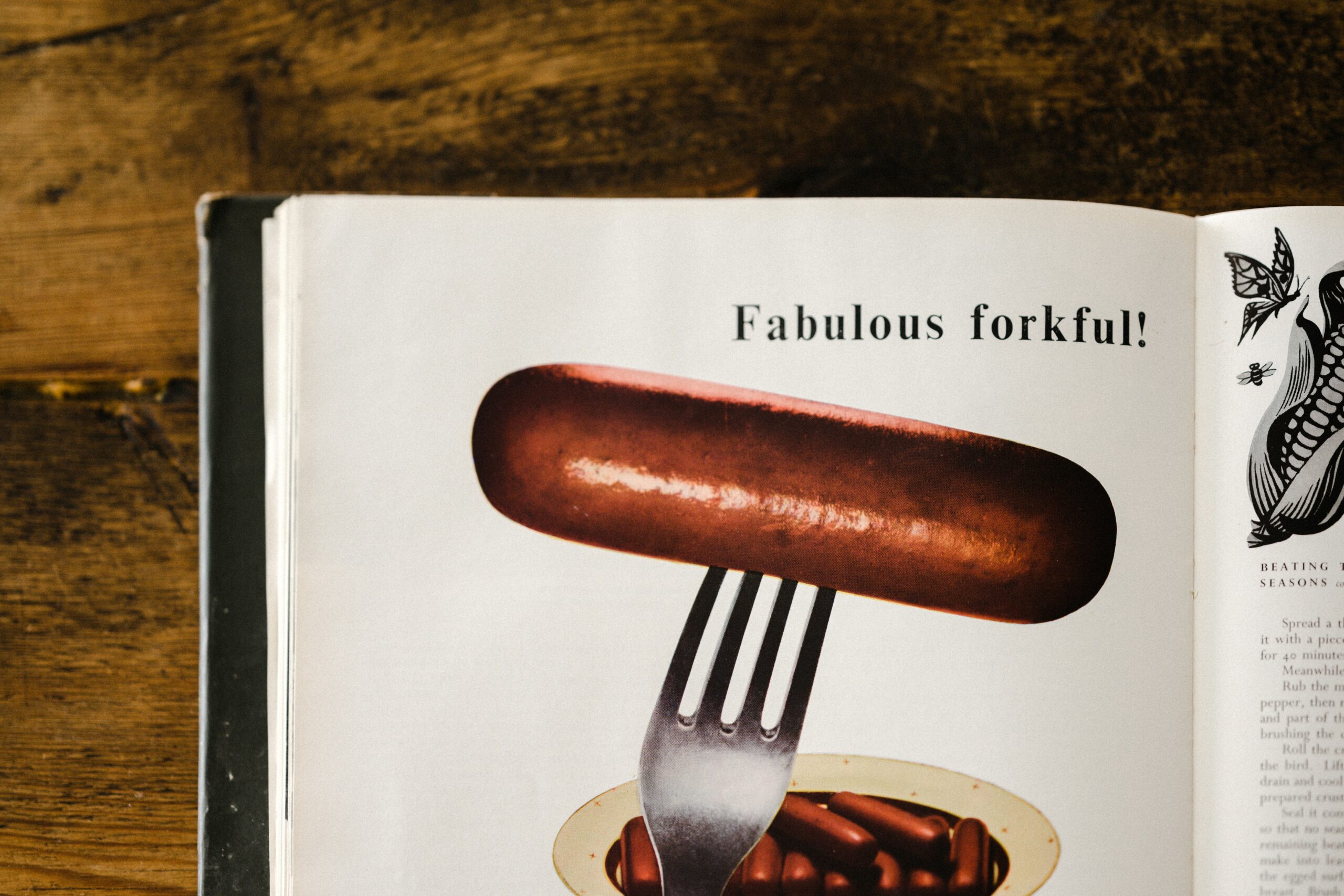
    This morning, I remembered being 15 years old and reading Naked Lunch, by William S. Burroughs. He said that the naked lunch is “a frozen moment when everyone sees what is on the end of every fork.” In those days, it rang true, but I didn’t know why. I was just in the presence of something deeply profound.

    But now I know. I look around the table and see what everyone is eating, whether they chose the morsel or not. I hate to tell you this, but it’s all inedible, pretty much. It’s all shit. But we have to eat it, because otherwise, what are we supposed to do?

    We have to go to the corporate job, because we need the insurance and the house. Or, we don’t have a corporate job and live in a crappier house and the deductible on our insurance gives us a heart attack if we think about it too deeply. We’re all trying to do the right thing, and choices have consequences. 

    Are you going to be selfish or are you going to do the right thing? And we’re all good people, right? 

    So we do the right thing. 

    We hold our nose, take our bite, and hope for the best. Even then, the only choice is to take it or not take it. There’s no way we’re getting something nutritious or good, we’re going to get what we get anyway. Either we get a bite or we don’t get a bite, but it’s never good.

    I don’t want to say that the hoops that I jumped through, the things I did, the choices I made for my children and my family weren’t worth it. Everyone got out alive, and I know that a lot of people don’t. I should be grateful. 

    But part of this moment is realizing that not everyone has to make the choice about whether to take the bite or not. There are a lot of people who get along by filling the forks. And I think we should start calling them out. Because our choice is not about us, but rather about them. 

    The next time I get fucked over, I want to at least know that it’s happening. I want every sensation acknowledged, and I want to know exactly who’s doing it. But most importantly, I want them to know that I know. 

    That good woman, who did everything right? She’s gone. And I will look them straight in the eyes when they do it.

    Want to keep in touch?
    I write to avoid teaching. Maybe you read to avoid something too. Join my list here — raw words, when they come.

  • Triptych: A List of Things You Would Not Believe, But Are Actually True

    Triptych: A List of Things You Would Not Believe, But Are Actually True

    Act I: Married

    We had a bird feeder in our backyard, and I often sat at the dining room table watching the swirl of birds through the half-fogged sliding glass door to the backyard like I was watching TV.

    He walked home for lunch every day and I sat across the table from him and watched in silence while he ate last night’s leftovers while looking at his phone. 

    On the weekends, we paraded the twins to the gourmet popcorn shop in Old Town, him in front with the children and me five or so paces behind, enjoying the quiet.

    Act II: After I Left

    I looked for fat sparrows everywhere like some people look for morels.

    As a special education teacher, I worked through lunch with a peanut butter and jelly sandwich, a few mini cucumbers, and an apple–then dragged another three hours of work home with me in a rolling bag.

    Cheese popcorn was my favorite dinner and I don’t know if I ever got all the cheese gunk out of the keyboard of my work laptop.

    Act III: Now, In Another Hemisphere

    I’m looking out my window at a tree with purple blooms in the middle of winter, watching hummingbirds the size of robins flit back and forth.

    I walk to a restaurant every day where mom and grandma work the kitchen while the son waits tables and my three course lunch costs $2.50.

    They bring you popcorn to put in the soup, and every time I drop in a handful I giggle.

    Want to keep in touch?
    I write about survival, reinvention, and what comes after the hard part. If you want to read more like this, join my list here — no spam, just honest words when they’re ready.

  • A Detective, A Dog Movie, and the End of a Chapter

    A Detective, A Dog Movie, and the End of a Chapter

    I talked to a detective today. She believed my story, but I don’t think she can do anything about it.

    I waited until my kids were 18 before talking to the police. I knew there would be consequences, and I wanted them to be at least some version of safe. I’m not sure it’s going to work. My son’s dad has already started arguing with him.

    I waited too long. I was scared, and I waited too long.

    I did everything I was told would keep us safe. I stayed home with the kids, went back to school, became a special education teacher. I worked in city schools. I took my meds and went to therapy. I made sure everyone ate, went to the doctor, and got where they needed to go.

    I wasn’t perfect, but I believed if you did everything right, things would turn out okay. They didn’t. I’ve been holding on with all my fingernails, and now I have to let go.

    I keep thinking I shouldn’t have to leave.

    Now I’m back at the house where I’m dogsitting, watching the pug’s favorite movie, A Dog’s Purpose. It’s terrible. I can’t stop crying. Not movie-crying — tears streaming for no clear reason. I just talked to a detective. I just told my son the truth.

    Maybe that’s reason enough.

    I fly to Toronto Monday morning, spend a week with three fantastic dogs on a ridiculous downtown balcony, and then I’m on another continent. I have no reason to come back. I feel emptied out.

    I don’t know if anyone knows how much I’ve been holding on. And now I’m crying at a manipulative dog movie with cake in the kitchen, at what’s either the bleeding edge of my past or the leading edge of my future.

    Thank god for cake.

    Want to keep in touch?
    I write about survival, reinvention, and what comes after the hard part. If you want to read more like this, join my list here — no spam, just honest words when they’re ready.

  • Stephen Colbert Got Cancelled—and So Did My Excuses

    Stephen Colbert Got Cancelled—and So Did My Excuses

    Stephen Colbert got cancelled last week. Which is devastating, because I was absolutely planning to go on his show—right after finishing the book I’ve been writing for the last 20 years.

    Everyone knows it happened; everyone’s up in arms. The hot takes on social media are probably done by now. Great job, everyone. Be proud of yourselves.

    I’ve never stayed up late enough to watch him live. I had kids, then a job that drained me so much I was in bed by 9 PM every night. But I watched the clips. And here’s the thing: Stephen Colbert saved my life.

    I’ve always written—and I’ve always been ashamed of it. Even when I edited a university lit journal and assisted a man who later had his NYT obit (RIP Lewis Dabney, you charming disaster), I felt like an imposter. Just some probably undiagnosed, mentally ill kid from a chemical company town who thought she was smarter than she was.

    I was naive enough to think that even without a trust fund, publishing connections, or family support, I’d still make it in New York as a book editor. It was the dream. I was 30, I’d worked my way through college, and I was ready.

    Then I died. And then I got pregnant.

    Writing became something I snuck in while caring for twins—because the circumstances were such that I was caring for twins all the time. My journals were one paragraph every two weeks. Proust went on the back burner. Grad school for literature? My ex said it was useless, and I believed him. So instead, I made my kids my entire world. I became the mom I wished I’d had.

    But still. Stephen was there.

    I had days I couldn’t be good. Days when I thought about the life I could’ve had if I hadn’t gotten knocked up. Days when I believed someone, someday, would realize I wasn’t crazy—that I actually had something. Somehow, I wrote 36,000 words of a sci-fi novel about a stay-at-home mom abducted by aliens who saves Earth from a corporate overlord race in league with the CIA. I put it in a baby-blue binder. I marked it up in red pen. Then I got in the minivan and drove to pick up the kids.

    When I wasn’t writing, I was on The Late Show. (Or Oprah. Didn’t matter.) I imagined being that mysterious Midwestern writer who changed science fiction. I’d win the Pulitzer, and sit under bright lights in a perfectly cut navy dress with silver ombré sparkles and flats, discussing craft and politics like a pro.

    Reality? The book wasn’t good. Because writing and editing a good book takes time and energy, and I had neither. Instead, I went back to school for special ed certification. It was brutal—everything was. It wasn’t until my marriage ended that I understood why.

    That’s another book. The one I swore I’d never write. The one I started last night.

    It’s not as funny as the alien-abduction novel, but it might save someone’s life. Stephen Colbert was the vision that kept me alive through that story—the possibility that someone, somewhere, might get what I was doing. That my frantic keyboard-banging between school pickups was actually the real story of my life. That vision kept me alive in a situation designed for me not to live.

    He’s part of the reason I’m here to tell it. But I’m not writing for him anymore. Or Oprah. Or the Vanity Fair glam shot after the Pulitzer. I’m writing for me. By hand, under a skylight in an Airbnb in Ecuador. Not caring about glamour—open to mystery, ready for what comes next.

    If I’ve done my math right, I have less than a year to publish if I want to live the dream of getting on his show. I better fucking get going.

    Want to keep in touch?
    I write about survival, reinvention, and what comes after the hard part. If you want to read more like this, join my list here — no spam, just honest words when they’re ready.

  • Nobody Talks About What Comes After the Resurrection

    Nobody Talks About What Comes After the Resurrection

    What happens when the suffering ends—and you have to decide how to live again?

    When you get to a certain time in your life, you’ve probably seen some shit. I know that there’s someone out there who has been perfectly loved and supported their entire life. I hear stories. I assume they’re true.

    Fucking good for them. The rest of us have scars. Some days I feel like all I am is a bunch of scars stitched together. 

    Yoga helps. When I started over a year ago, I was so locked in my body that it feels like a miracle every time I feel space between my ribs. I can do things with my body now that I never thought I’d be able to do. Last October, I went to a retreat in Morocco and couldn’t stand on one foot for three seconds. I didn’t trust the earth to hold me up. Now I can hold crow for five seconds—and when I rise from it, I yawp like Whitman intended. The scars are there, but they’re not binding me any more. They move, they stretch. Some of them are even changing. 

    I am living with things that I never thought I would live with. I thought that the things that happened to me would kill me eventually and all I was doing was enduring until they finally took me down. I thought I was on borrowed time until my past consumed me. I thought that I had worked so hard to get off a ventilator and get sober and to survive things that other women do not survive in order to just exist. 

    I thought that if I endured enough, something good would happen. I was taught this. In CCD, I learned that good people who suffer in the correct way get to heaven. The crucifix above my childhood bed told me suffering was holy. Jesus hung on that cross for us, and every lesson at church was a meditation on pain. Later, Buddhism taught me that life is suffering. Every script says the same thing. Every script says endure. 

    But the more I learned about the world, I learned that there are probably things that are worse than death. The loneliness that lasts years. The violence disguised as love. The pain of a mind turned on itself. 

    In the past few years I’ve learned there is nothing good enough in this world or beyond to justify the suffering that I’ve been through. Not that my suffering is unique–I’m a middle aged, middle class white woman in the United States of America. However, there have been layers on top of it that have made it unbelievably hard, and there are some days, more than I’d like to admit, that the act of letting my feet hit the ground when I get out of bed in the morning isn’t so much the start of an amazing opportunity but rather a question: Can I really do this today? Can I put one foot in front of the other without collapsing? 

    Adrenaline kept me going for a couple of years, but after I got back from Morocco last March I couldn’t pretend to be functional any more, at least in the way I used to be. That’s a story in itself. It’s a chapter in a book that I’m writing, and I’ll leave it there for now. 

    But today I realized that yes, life is suffering, but not the way that we’re taught. We all are born with wounds that we spend our whole lives trying to heal, and so many of us get other ones layered on top of the original. 

    Although we can put a number to our pain in the emergency room, we cannot rank ourselves amongst others based on who has endured the most. (Although many people would like to try.) Trauma isn’t a sliding scale: In the middle of what we can’t control—and the shame and guilt after—we all feel the same: naked, alone, and desperate to hide.

    But today, after stretching and moving my scars around so that they are .001% more flexible, I realized that I’m no longer in pain. And now that I’m not enduring, I have no idea what to do with my life. There’s no manual here. There’s no manual for being scarred so deeply that you no longer resemble anything close to who you used to be but are still expected to follow the same rules. 

    I don’t want to live like that any more. 

    I think that most people don’t know that where I’m at even exists. This is the realm of young, white, male philosophy majors with trust funds, and I panicked that I cannot afford to be in this rare air. Regardless, I AM here, and I AM breathing it. 

    What the fuck do I do?

    I do know this: in just a few days I will be on my fifth continent in just over six months. I might want to move there, I might not, but I’m exploring. The last time I did this I ended up moving across an ocean three weeks later, and I have a feeling that this might be a similar situation. 

    But this is the first time that I’m truly free. I’m not escaping, I’m not fleeing, I’m not trying to get as far away from something as possible. I’m coming from a place of curiosity about what comes next, without the anxiety of what might happen actively nipping at my heels (and being consciously ignored). I don’t know what’s going to work, but I know what didn’t in the past, so I’m going to stay away from that. 

    No one ever talks about what comes after the suffering in real life. Nobody tells you what comes after the resurrection. I’m about to find out.

    Want to keep in touch?
    I write about survival, reinvention, and what comes after the hard part. If you want to read more like this, join my list here — no spam, just honest words when they’re ready.

  • What’s a Poem Worth?

    What’s a Poem Worth?

    I believe every person is a poem written by God. The people in charge right now have no appreciation for poetry.

    We’re all poems. We’re all music and dance; we’re all art. Jeff Bezos is art, but so is my friend Willie who repeated everything I said back to me with a smile because he needed extra help with social communication. J. D. Vance is art, but so is my friend Deonte who was sitting in the cool down room because he’d been through 3 foster homes—one of them a group home, by God—in the past 3 years and no, staying seated in his chair was not at the top of his list of priorities when he hadn’t had his mood stabilizer that morning. Donald Trump himself is even art, but so was my friend Sariah who had an alphabet soup of diagnoses at the age of 14 and was having a very loud and angry conversation with God about how she was pregnant and couldn’t handle it in the bathroom, so loud that the two other girls who had been in there vaping ran straight past security and out the back doors of the school.

    I don’t know how to talk about this without sounding like some sort of Christian asshole. This language is co-opted all the time by people who protect the rights of fetii over grown women, and I hate that. If you have your own children, or have loved other people’s children with any depth, you know in your bones it’s true. You know that DNA has a soul and that the world aches with beauty, and these assholes take that idea from you and use it to hold individual women accountable for their biology’s mistakes.

    Meanwhile, these same people are talking about fiscal responsibility and how important it is to tighten the national budget in the name of discipline. Collectively, we can understand. We know that there are some months we just can’t afford a new iPhone. We know that bills come out of our income, and if we want a better income then we need another job or we just need to make do.

    We are taught from childhood that money implies a choice. And it’s easy to believe that on a national level that we are being too free with our choices and therefore we need to cut back.

    But that’s not how government budgets work. Governments print the money. Governments create the numbers that support the programs that keep God’s poems in living, breathing bodies.

    When we start looking at our government priorities and choosing which poem gets to be in which body, we start going down a slope that bodes not well for all of us. Not one of us is a perfect poem, and none of us are in perfect bodies. When we start acting from a place of lack, of tightening our belts, of making difficult choices, something’s got to give.

    I know that everyone thinks money is real, but it’s really not. It’s not attached to the gold standard any more. Money is just a number assigned a value, and it’s done by banks. It’s a metaphor.

    Banks are not some sort of neutral computer. Banks are made up of individual people who make decisions about value and worth. Each dollar is not a piece of paper, each dollar is math. It’s an idea, not an actual object.

    The greatest con ever pulled was people with unlimited resources convincing people without resources that this paper token represents something real. This quarter is equal to one gumball, for example. This hundred dollar bill is equal to one month of electricity. But the problem is that the people in power can change the value of the gumball to 35 cents. You can use more electricity in the summer because it’s 90 degrees outside and you’re running an air conditioner in your bedroom window so you can sleep and therefore go to work rested. Your electricity bill is no longer equal to a $100 bill.

    Yes, values can shift, and the market determines the prices for goods and services. But no one really talks about who chooses the value of the tokens.

    It’s people that you’ve never met–while you’re still trying to buy a gumball for a quarter. They use this ability to determine the value of the tokens in order to manipulate the economy itself. In an ideal world, they do this to encourage growth so there’s more tokens for everyone.

    But things have gotten a little off the rails lately.

    Congress just passed an absolutely terrible budget bill. There is a legitimate argument that I’ve seen repeated over and over again that it’s just cutting services for poor people in order to give billionaires bigger tax cuts. But I don’t think anyone understands: billionaires have so many resources that the value of the tokens is completely irrelevant. What does adding a billion dollars to $236 billion dollars do? You still have more money than God. You just have more of it.

    That value of the token means something completely different to people who rely on the government for health care. These are people for whom even $100 being taken away means they can’t pay for the electricity that month, and for many others it gets even worse.

    If these people don’t have the money for health care, they’re not going to go to the doctor. I know this intimately. Moms are going to skip prenatal appointments, young men are going to just live with that hernia for another month and—and this is the one we really have to pay attention to—people are going to skip their psychiatric drugs.

    People who skip their psychiatric drugs aren’t predictable. They are confused and sometimes in literal pain. And people in that space have a tendency to not pay very close attention to things. Their impulse control is down, so they may do things that they don’t normally do. And if they’re brown or black and under extra surveillance anyway due to systemic racism, the people in charge are more likely to notice when they do things that aren’t too kosher. And when they get noticed by the people in charge, they’re more likely to be put in a holding cell. And when they can’t defend themselves because they’re mentally and physically disoriented, they go from a holding cell to a detention center.

    Do you see where I’m going?

    For people with disabilities, if they don’t get their medication, the same things happen. I saw it in special education all of the time. They get put in a holding cell, and if they can’t defend themselves because they can’t put one thought in front of the other, they go from a holding cell to a detention center.

    Please, do you understand?

    When you have no problem accessing resources, you never know what it’s like to be in that space because all of your needs are being taken care of. Someone at some bank, or someone in some government, decided that for some reason your poem is more important than the poems who do not have $236 billion dollars and can’t afford their electricity this month because they wanted to sleep at night and show up work the next morning.

    I don’t know what your poem sounds like. I don’t know what alliteration it has, if it rhymes, if it’s an epic saga about the battles between the gods or a haiku about a soap bubble in the kitchen sink. I don’t know if your music has a meter or if it’s just the reverberation of one hit on a snare drum.

    No poems deserve to go away because the cost of paper that they’re written on went up. No music deserves to stop because the closet it’s being made in could be better used for storing toilet paper.

    We are not on the right side of history currently. And I will not stand by while poems and sheet music are shredded for fuel.

    Get in touch. Contact me here.

  • What It Means to Bomb a Nuclear Site and Have No One Die

    What It Means to Bomb a Nuclear Site and Have No One Die

    I grew up next to one of the most tightly guarded chemical plants in America. I’ve spent my life knowing what a direct hit means.

    The United States bombed nuclear sites in Iran last night. No one died.

    I’m not a military strategist, but my childhood was deeply tied to a defense contractor. I grew up next to Dow Chemical—once the home of Union Carbide, briefly merged with DuPont, now fractured again into three entities. The corporate structure is by design. It’s the old story of repackaging global trauma into financial products.

    The money is important, but what’s more important is that both of my parents worked at a defense contractor that was described to children as a manufacturer of consumer goods. My dad was a chemical engineer. My mom was an assistant to the outside board of directors. In high school, we went to the company store and were amazed at all of the things “made by Dow” but really made by its subsidiaries, that is, until Dow started selling off its consumer divisions. Suddenly it did not make Scrubbing Bubbles. Then Sudafed. Then the cheap toothbrushes.

    Now it’s just chemicals that are mostly unnamed or too confusing for people not in the chemical industry to understand. But we kids knew.

    We knew something else, too. We knew that in the late 1980s we weren’t allowed to visit our parents inside the plant anymore, and that if they forgot their IDs–even if they’d worked there for over 20 years and saw the same security guards every day–they’d have to come home and get them before they could get through the two security gates. This was over 20 years before 9/11 shut everything down. We knew that we were on a nuclear bombing list in the 1980s–I not only was conscious of the Cold War in middle school, but would lay in my front yard with my best friend when I was 10 and we would imagine what we would do if a bomb fell from the sky, right then.

    That was the reality.

    The plant was lit up night and day—one of the best places to go make out in your dad’s car was Overlook Park, which overlooked the cooling ponds. It was lit up like the stars. The metal tubes of chemicals that you could drive a Honda Civic through glowed in their off-white and pale blue, always freshly painted with their hazard symbols clear.

    The engineers all worked shift work, so almost everyone had a dad doing night shift at any time. There were always people in the plant. Even in the middle of the night. Hell, you’d make 2 1/2 overtime if you worked on Christmas. There was always security not only at the gates but patrolling the buffer zone between the two 25-foot electric fences with razor wire on the top in small white trucks with the Dow diamond logo on the side.

    Dow was not a nuclear plant; it was a chemical plant. But if it had been bombed, dozens if not hundreds of people would have died, even in the middle of the night. And Iran is saying that no one died when three nuclear plants were bombed with Tomahawk missiles from B-2 bombers.

    Thank God for international spy networks. We are very, very lucky.

    For continuing updates, you can follow Al Jazeera’s latest coverage.

    Get in touch. Contact me here.

  • Forgotten Grace

    Forgotten Grace

    My son is graduating from high school this Saturday. We had a video chat last night, talking about our dumb Autistic looping thoughts and how hard they are to explain. How lonely it is when no one else seems to get it. Every word he said felt like it had come out of my own head.

    I’m the mom. I’m supposed to have things figured out.
    But I don’t.
    What I do know is that neither of us have any idea what we’re doing with our lives right now.

    Grace has been hard to come by lately.
    It showed up last night in that conversation, when I realized he was saying things I’d already thought four times that day.

    He’s scared he’s going to do everything wrong and end up with something he never planned on—something worse than anything he can imagine.

    I get it. That feeling never really goes away.
    Even when you’re almost 50.
    Even when you’ve lived a whole life, burned it down, and started again.
    More than once.

    Unfortunately, we fuck up sometimes. Not because we want to hurt people, but because we’re hurting. Or scared. Or miserable.
    Sometimes we blow up the good things because we don’t recognize them for what they are until the smoke clears.

    That doesn’t make us evil.
    It just makes us human.
    And humans need grace.

    So this is for anyone who thinks they fucked up.
    Anyone who blew up their life and is now looking in the ashes and seeing body parts instead of gold nuggets.
    Who thinks they’re a piece of shit—and might even be right—
    but also needs to know that being a piece of shit doesn’t disqualify you from grace.

    I see you.

    The misery won’t last forever.
    That’s not what we’re built for.
    We are built to heal.
    Slowly.
    Awkwardly.
    In fits and starts.
    But always, always with the chance to open again.
    To try again.

    Even if you don’t know what you’re doing.
    Especially if you don’t know what you’re doing.

    I didn’t know what to tell my son yesterday. So I told him the truth—that everything he was feeling, I’d felt too.
    He said he just wanted to find the right words and maybe people would understand.
    I told him I knew exactly what he meant.
    I have a goddamn English degree because of this.

    But maybe the right words aren’t the clever ones.
    Maybe they’re just the real ones.

    So, to the person reading this who needs the grace I always forget I have too—
    I’m going to tell you exactly what I told my son:

    No matter what you do or say, no matter how bad you think it is,
    I’m here.
    Come sit by me.
    We can be fucked up together.

  • The Gift of Being Tired

    The Gift of Being Tired

    I woke up with a creak this morning. Almost a groan.

    I’d slept enough—actually, I’d slept for a very long time—but I could feel my age. For the first time, I felt old.

    I apologized to the dogs I’m sitting while making their breakfast, told them we wouldn’t be walking until after dinner, made coffee, and sat at the table. I thought about my dreams. I thought about people I’ve known. I thought about what the hell I’m going to do with the rest of my life.

    I thought that maybe I’d been a little too intense with the yoga yesterday—it was the first time I’d actually put my intention on my breath. And I thought about how I’ve expected everyone else to take care of me in ways they never could have known I needed.

    And I put that shit to bed.


    I realized this morning that I’m old enough to be a grandmother.

    If I’d had a child at 24, they’d be 24 now. They could easily have a child of their own. Forty-eight is not shockingly young for a grandmother. Ideally, your kid’s a little older—because the older you get, the more you realize that 24 is basically a brilliant disaster—but it’s possible, and in many communities, expected.

    My reproductive years ended abruptly at 42 with a full hysterectomy, and the HRT gave me pulmonary embolisms. So I’ve been without estrogen for at least five years. Things are mostly going well—but I still thought I was young. I thought if I lost enough weight, drank enough water, and used enough retinol, I’d stay 25 forever.

    And to be fair, thanks to sunscreen, vitamin C serum, and copious hydration both inside and out, my face doesn’t look my age.

    But this morning, I felt it.

    Yes, the yoga helps. I can still get on the floor with kids and get out of chairs without grunting, but this body is not a machine that generates infinite energy. (What is the name for that lie, by the way? The one that tells us we’re not allowed to run out?)


    I’ve been sober since 2012, which is amazing. But I’ve still been chasing things like I’m drunk. Hustling. Proving. Craving the rush of getting it right.

    I love playing the angles. I love walking into the cave full of dragons and emerging without a scratch. I love living for the story. I love having a life that makes a great memoir.

    But I’m tired.

    I think I’m done with that.

    I think I want to teach little kids English. Help them exist in their weird little brains. I think I want to live somewhere quiet, where nobody knows what I’ve been through. I want to drink good coffee. I want to stop working 60 hours a week on paperwork no one will read, written to satisfy laws that won’t matter by fall.

    I want to stop thinking that carrying other people’s burdens is holy. I want to put them all down and creak along, following my heart—and taking the time to figure out what it even wants.


    I hate saying this. But I’ve done so much. I’ve had to push through and power on, and… I’m tired.

    I’ve earned some peace.

    I’ve earned my age. I’ve earned respect, and I’ve earned a little wisdom. I’ve earned the right to let other people be. I’ve earned the right to be choosy about who I spend time with. I’ve earned the right to live and let live.

    My entire life, I thought if I just followed the rules, everything would turn out fine. That I’d have a good life. But the rules? They don’t mean shit.

    I just want to be left alone. Probably with one—or preferably both—of my sons. I want to do what I need to do. I don’t want to live up to anyone’s expectations anymore.

    I’m tired.


    So this is what I’m going to do:

    I’m going to ride out this in-between place I’m in.

    I’m going to build a plan for wherever I end up next. I’m going to leave other people to their games. I’m going to let myself feel old—but solid. So, so solid.

    I’m going to let myself be slow.

    I’m going to put down the to-do list. I’m going to trash the bucket list. I’m going to move forward in the knowledge that we only get so much time on this earth—no matter how chipper or magical or manifest-y we think we are.

    I’m going to rest in the knowledge that the hurry leads to mental illness. It leads to poor decisions—or worse, decisions you never wanted to make.

    I’m going to release everyone from whatever role I thought they should play. I’m going to let them be who they are. I’m not going to resent them for not being what I needed them to be.

    I’m going to sit here and release, and see what stays.

    Schedules are artificial. Social obligations, even more so.


    I’m tired.

    If you’re tired too, come sit with me.

    I’ll put on some ancient flute music. We can color in my bird coloring book. We can read. I can make tea. The coffee’s kind of cold, but I’ll brew a fresh pot. Later, I need to go to the store for dinner stuff, but you don’t have to come if you don’t want to.

    Just, please—don’t tell me who I am. Don’t tell me what to do. I don’t fucking care.

    I’m going to be slow now.

    I’m going to let my insides move like molasses while I sit on a sun-warm rock.

    I’ve been through the wars.

    Let me be.